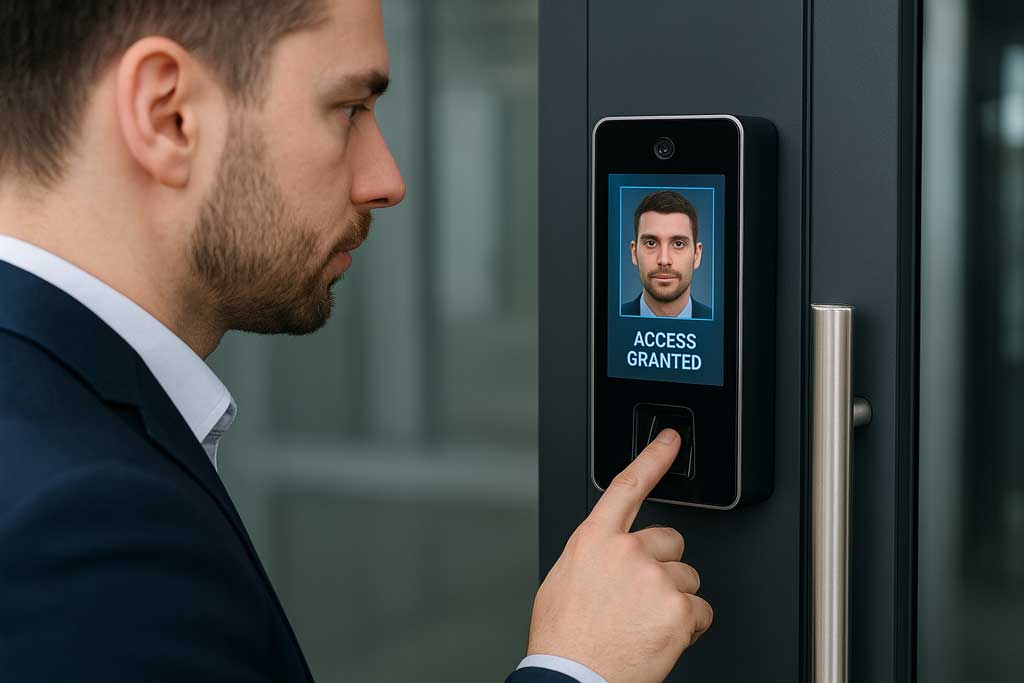
In an era where data breaches make headlines weekly and regulatory scrutiny intensifies by the quarter, organisations face a paradox: the very security measures designed to protect their premises and information may expose them to significant legal risk. Biometric access control systems—which authenticate identity through fingerprints, facial recognition, iris scans, or voice patterns—have become ubiquitous across corporate environments, from City law firms to manufacturing facilities. Yet whilst these systems offer unparalleled security advantages, they simultaneously create a web of legal obligations that many organisations fail to fully appreciate until it’s too late.
The Regulatory Minefield: Why Biometric Data Demands Different Treatment
Biometric information occupies a unique position within data protection law. Under the UK GDPR and Data Protection Act 2018, biometric data processed for identification purposes constitutes “special category data”—the most sensitive classification available. This isn’t merely a technical distinction; it fundamentally alters an organisation’s legal obligations.
Unlike a password or access card, which can be changed if compromised, your fingerprint or iris pattern cannot be reset. Once biometric data is breached, the consequences are permanent. This immutability is precisely why the Information Commissioner’s Office (ICO) subjects biometric processing to heightened scrutiny and why the penalties for non-compliance can be severe—up to £17.5 million or 4% of annual global turnover, whichever is greater.
The Consent Conundrum
Many organisations operate under the mistaken belief that employee consent legitimises biometric data processing. In practice, the power imbalance inherent in the employment relationship means consent is rarely considered “freely given” under data protection law. Employers typically must rely on alternative legal bases—such as legitimate interests—which requires a meticulous balancing exercise between organisational security needs and employee privacy rights.
This balancing test isn’t a formality. It demands documented evidence that less intrusive alternatives were considered and rejected, that appropriate safeguards are in place, and that the processing is proportionate to the security threat faced.
Beyond Data Protection: The Expanding Legal Landscape
Whilst data protection receives the most attention, it represents only one dimension of the legal framework surrounding biometric access control.
Employment law considerations are equally crucial. The implementation of biometric systems without proper consultation may constitute a fundamental change to terms and conditions, potentially triggering collective consultation obligations or constructive dismissal claims. Trade unions have increasingly challenged biometric surveillance, viewing it as disproportionate monitoring that erodes workplace trust.
Discrimination and Equality Act Implications
Biometric systems that fail to accommodate certain individuals may breach equality legislation. Facial recognition technology, for instance, has demonstrated varying accuracy rates across different ethnic groups and genders. Systems that cannot adequately process individuals with certain disabilities—such as those affecting fingerprint clarity or facial features—may constitute unlawful discrimination unless reasonable adjustments are implemented.
The Equality and Human Rights Commission has noted that automated decision-making systems, including access control, must be regularly audited for bias and disparate impact.
Practical Steps: Building Legal Resilience into Your Security Infrastructure
Forward-thinking organisations approach biometric access control as a governance challenge, not merely a technical implementation.
Begin with a comprehensive Data Protection Impact Assessment (DPIA) before deployment—not as a box-ticking exercise, but as a genuine risk evaluation. This assessment should examine alternatives, identify vulnerabilities, and establish monitoring protocols. The ICO has made clear that DPIAs for biometric systems should be particularly rigorous, given the special category status of the data involved.
Transparency obligations extend beyond generic privacy notices. Employees and visitors must receive clear, accessible information about what biometric data is collected, how it’s stored, retention periods, and their rights—including the right to object. This information should be provided before any data is captured.
Technical Safeguards and Vendor Due Diligence
The legal responsibility for biometric data processing cannot be outsourced. Even where third-party systems are deployed, the organisation remains the data controller and bears ultimate accountability. Vendor agreements must include robust data processing clauses, security commitments, and audit rights. Yet many organisations sign contracts without adequately scrutinising these provisions, only to discover gaps when incidents occur.
Encryption, access controls, and segregation of biometric databases from other systems represent minimum technical safeguards. The ICO expects organisations to employ state-of-the-art security measures commensurate with the sensitivity of biometric data.
The Cost of Complacency
As biometric access control becomes standard, regulatory expectations evolve accordingly. What may have passed muster five years ago no longer satisfies current compliance standards. Organisations that view biometric systems purely through a security lens—without appreciating the accompanying legal obligations—expose themselves to regulatory action, employment claims, and reputational damage that far exceeds any security benefit gained.
The question isn’t whether biometric access control is necessary, but whether your organisation has the governance infrastructure to deploy it lawfully and sustainably. In an increasingly regulated environment, that distinction may determine not just your security posture, but your legal resilience.
Featured image: AI Generated.